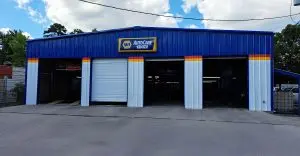
Phil’s Car Care has served drivers from its Porter, TX shop since 1988, with an approach centered on identifying the actual problem, explaining what technicians find, and helping customers make informed repair decisions. The shop uses Digital Vehicle Inspections and available CARFAX maintenance history to give customers additional context about their vehicles.
If your 2021 or 2022 Ford F-150 develops a vibration or shudder at highway speed, the tires are certainly one possibility, but they are not the only one. Tire radial force variation, wheel runout, wheel bearings, steering or suspension components, the driveline, transmission operation, and powertrain control can all create sensations a driver may simply describe as “shaking.”
| Quick answer: A 2021-2022 Ford F-150 that shudders at highway speed may have a tire, wheel, driveline, suspension, bearing, transmission, or powertrain-control issue. The most useful clues are when the vibration starts, whether it changes with throttle or gear, and where it is felt in the truck. |
Ford has also published technical service information for a specific light-throttle highway-speed shudder affecting certain 2021-2022 F-150s equipped with the 2.7L or 3.5L EcoBoost or 3.5L PowerBoost and built on or before May 12, 2022. That does not mean every F-150 vibration is related to the bulletin. A useful diagnosis starts by reproducing the exact symptom and figuring out what makes it begin, change, and stop.
A Ford F-150 Shudder and a Ford F-150 Vibration Are Not Always the Same Problem
Two F-150 owners can describe their trucks almost identically: “It shakes around 65 mph.” What the technician needs to know is what “shakes” actually means.
One truck may have a steady vibration that increases with road speed. Another may feel smooth while cruising and develop a brief shudder only when the driver lightly presses the accelerator in a higher gear. To the driver, both can feel like a highway-speed shake. To the technician, the difference between a vibration that follows road speed and one that appears only under throttle can completely change where the diagnosis begins.
Drivers also do not always use automotive terms the same way technicians do. A tire vibration may be described as a transmission problem. A driveline shudder may be called a misfire. An engine-related roughness may be described as something coming from underneath the truck. That does not mean the driver is describing the problem incorrectly. The job is to translate the description into a repeatable operating condition.
- What speed does the vibration begin?
- Does it happen while accelerating, cruising, or coasting?
- Does lifting off the accelerator change it immediately?
- Is it felt mostly in the steering wheel, seat, floor, or whole truck?
- Does it happen when the truck is cold, fully warmed up, or both?
- Does towing or carrying a load make it different?
- Does it appear in one particular transmission gear?
Those details often tell a technician more than the word “shudder” by itself.
Why a Ford F-150 May Vibrate at 60 to 70 MPH Even When It Feels Fine Around Town
For a Porter-area driver who spends part of the week at highway speed, a vibration may never show up during short neighborhood trips. The truck can feel completely normal leaving the driveway and only begin to shake once vehicle speed and component rotational speed increase.
A vibration around 60 to 70 mph may involve tire imbalance, radial force variation, tire or wheel runout, a damaged tire, a wheel or hub concern, or a driveline-related source. The speed range is useful information, but it does not identify the failed component by itself.
A small imbalance that is barely noticeable at 35 mph can become much easier to feel once the wheel is rotating at highway speed. A wheel-speed vibration tends to track closely with road speed. A driveline vibration may change more noticeably with throttle, load, or gear because the driveshaft and related components respond to torque as well as rotational speed.
- Wheel and tire balance
- Tire pressure and condition
- Bent or damaged wheels
- Tire runout
- Wheel runout
- Tire radial force variation
- Hub mounting surfaces
- Wheel bearings
- Driveshaft condition and runout
- Related driveline components
Wheel-bearing nuance: A worn wheel bearing is more often associated with humming, growling, or a noise that changes during turns, but excessive bearing or hub wear can also contribute to vibration in some cases. That is why a bearing should be evaluated from its actual symptoms rather than added to a parts list simply because the truck shakes.
Hidden tire damage also matters. Internal tire damage or belt-related problems may not be obvious during a quick visual inspection. A tire can look acceptable from the outside and still behave abnormally at highway speed, which is one reason diagnosis should not stop with appearance alone.
What Many Drivers Do Not Realize About Tire Balance and Road-Force Variation
A tire can be balanced correctly in terms of weight and still create a vibration on the road. Conventional balancing corrects uneven mass around the tire and wheel assembly. It does not automatically correct tire stiffness variation, excessive runout, or every condition that appears only when the tire is carrying the truck’s weight.
A road-force machine places load against the rotating tire. This can help identify a tire or wheel assembly that looks acceptable on a conventional balancer but behaves differently when loaded. That does not mean every F-150 with a highway vibration needs road-force balancing. It means a normal balance result should not automatically end the tire and wheel investigation if the symptom still points in that direction.
Phil’s provides tire and wheel alignment services for Porter-area drivers, but the larger diagnostic question is still the same: does the tire or wheel condition actually match the complaint the driver came in for?
A Wheel Balance or New Tires May Improve Ride Quality Without Fixing the Original F-150 Shudder
It makes sense that tires are often the first suspect. The truck shakes at highway speed, the wheels are spinning quickly, and balancing is a familiar service. But a tire balance is a service, not a diagnosis for every vibration.
An inspection may uncover something that genuinely needs attention without proving that it caused the original complaint. For example, a technician may find worn tires on a truck that also has a separate light-throttle shudder. The tires might deserve replacement because of their condition, but replacing them should not automatically be presented as the cure unless the vibration pattern supports that conclusion.
New tires may make the truck ride noticeably smoother overall. Road noise may decrease and small wheel-related vibrations may disappear. If the original light-throttle shudder is still present, though, the underlying complaint has not been fully resolved. The technician needs to distinguish between a repair that improved ride quality, a maintenance item that genuinely needed attention, and the repair that eliminated the specific complaint.
Two F-150s Can Have the Same Complaint and Need Completely Different Diagnostic Paths
Consider two representative 2021 F-150s. Both drivers say the truck vibrates around 65 mph.
The first truck has already had its tires balanced. During a road test, however, the truck is smooth while coasting at the same speed and begins to shudder when light throttle is applied in a higher gear. That pattern changes the diagnostic direction because the complaint is linked to load and gear, not simply road speed.
The second truck vibrates steadily around 65 mph whether the driver is lightly accelerating or coasting. That pattern gives tire condition, wheel runout, radial force variation, wheel-end components, or another road-speed-related source more weight in the investigation. The driver may describe both trucks as “shaking on the highway.” From a diagnostic standpoint, they are not the same problem.
Ford F-150 Steering, Suspension, Wheel Bearing, and Driveline Problems Can Create Similar Highway Vibrations
Some drivers request an alignment as soon as the steering wheel begins to shake. An alignment may be worth checking, especially if the truck also pulls or has abnormal tire wear, but alignment angles alone do not explain every vibration.
Alignment concerns more commonly show up as uneven tire wear, pulling or drifting, an off-center steering wheel, or tracking problems. A true vibration may require a broader inspection.
Steering and suspension components can affect how wheel movement is transmitted through the chassis. Wheel bearings and hub assemblies can also contribute when wear becomes excessive. Depending on configuration and symptoms, the driveline side of the inspection may include the driveshaft, U-joints where applicable, CV axles where applicable, differential, and engine or transmission mounts.
Driveline Vibration Often Changes With Load, Throttle, or Gear
A truck that shakes at 65 mph regardless of throttle input may point the diagnosis one direction. A truck that begins to shudder when the accelerator is pressed and smooths out immediately when the driver coasts may point somewhere else.
When the symptom behaves that way, a technician may consider driveshaft balance or runout, driveline angles, U-joints where applicable, differential-related concerns, mounts, or powertrain operation depending on what the road test shows. The change in symptom tells the technician which branch of the diagnostic process deserves attention.
Recent Tire, Suspension, Driveline Work, or F-150 Modifications Can Change the Diagnostic Baseline
One of the first practical questions should be: What changed before the vibration started? Recent tire work, suspension changes, wheel replacement, hub service, or driveline work can all matter. The important part is timing: did the vibration begin immediately after the work, or was it already developing beforehand?
A leveled or lifted F-150 may no longer have the exact driveline geometry, tire mass, wheel offset, or suspension position it had from the factory. That does not automatically mean the modification caused the vibration, but it changes the baseline the technician is working from. Aftermarket wheels and oversized tires can also change rotating mass and tire behavior.
- New tires or a tire rotation
- New or aftermarket wheels
- Suspension repair
- Brake or hub work
- Driveshaft service
- Transmission or differential service
- Lift or leveling kit installation
- Oversized tire installation
Recent work should not be blamed automatically. It simply becomes part of the evidence and helps the technician decide what should be checked first.
Some 2021-2022 Ford F-150 Highway-Speed Shudder Is Associated With Powertrain Control Software
Ford TSB 25-2383 applies to certain 2021-2022 F-150s equipped with the 2.7L or 3.5L EcoBoost or 3.5L PowerBoost engines and built on or before May 12, 2022.
Ford describes the applicable condition specifically as a vibration or shudder during light-throttle tip-in at highway speed in 8th, 9th, or 10th gear, with no diagnostic trouble codes present. Ford states that the condition may be related to various PCM software parameters and provides a software-related repair procedure for trucks that meet the bulletin’s requirements.
That specificity matters. A 2022 F-150 with a steady steering-wheel vibration at 65 mph regardless of throttle is not automatically demonstrating the condition Ford describes. Neither is a truck that shudders at low speed, has a different engine, or does not meet the bulletin criteria. The service information is a diagnostic branch, not a universal explanation for F-150 vibration.
A Ford Technical Service Bulletin Is Not the Same as a Recall
A Technical Service Bulletin gives technicians manufacturer guidance about a condition, its applicability, and a recommended service procedure. A recall is different and involves a separate manufacturer and safety-campaign process. The existence of a TSB also does not establish how frequently every F-150 experiences the condition.
A Light-Throttle F-150 Shudder Does Not Automatically Mean the Torque Converter Is Failing
Owners researching a highway-speed shudder often encounter the phrase “torque converter shudder.” That can make it tempting to jump immediately to a transmission failure.
A torque converter can be involved in some shudder complaints, but the symptom alone is not enough to condemn it. Converter operation, transmission control, driveline behavior, engine operation, mounts, rotating components, and software-related powertrain conditions can create sensations that overlap from the driver’s seat.
Ford’s own bulletin is a useful example. On qualifying trucks with the specific higher-gear light-throttle condition, Ford identifies PCM software parameters rather than instructing technicians to automatically replace the torque converter or transmission. The operating pattern should lead to testing, not straight to a repair conclusion.
NVH Testing Can Help Separate Wheel-Speed, Driveline, and Engine-Related F-150 Vibration
What feels like one general shake from the driver’s seat may have a measurable frequency that points toward wheel speed, driveshaft speed, or engine speed. This type of analysis falls under NVH, or Noise, Vibration, and Harshness diagnosis.
A wheel and tire rotate at one rate, the driveshaft at another, and engine vibration follows engine speed and firing events. Comparing vibration frequency with road speed and engine RPM can help narrow which rotating system deserves the closest inspection.
| Symptom Pattern | Area a Technician May Investigate |
| Vibration mainly follows road speed | Tires, wheels, bearings, or another rotating component |
| Vibration changes noticeably with throttle | Driveline or powertrain |
| Vibration mainly felt in steering wheel | Front wheel/tire or front chassis area |
| Vibration mainly felt through seat or floor | Rear wheel/tire or driveline |
| Shudder appears only in a particular higher gear | Powertrain or driveline investigation |
This is not a diagnostic shortcut. Two different problems can produce very similar sensations. Sometimes good diagnosis results in a repair recommendation. Sometimes it establishes that the measured condition does not justify replacing anything.
Diagnosing a Ford F-150 Shudder Requires Reproducing the Conditions That Make It Happen
Connecting a scan tool and finding no trouble codes does not finish the diagnostic process. For highway vibration, the driver’s description comes first, followed by a road test and inspection that match the actual pattern.
Phil’s Car Care uses Digital Vehicle Inspections and available CARFAX maintenance history to help add context to the vehicle’s condition and previous maintenance. The article’s diagnostic principle is broader: a code, an inspection finding, or a worn part is only useful when it fits the complaint being investigated.
- Confirm the speed where the vibration begins.
- Determine whether the truck is accelerating, cruising, or coasting.
- Check whether lifting off the accelerator changes the symptom.
- Note whether the truck is cold or fully warmed up.
- Identify where the vibration is felt in the cab.
- Ask whether the truck is towing or carrying a load.
- Review recent repairs or modifications.
- Inspect tires, wheels, hubs, bearings, steering, suspension, mounts, and driveline components as indicated.
- Review scan data and transmission gear when the symptom suggests a powertrain branch.
- Compare the findings with applicable manufacturer service information.
Drive Time and Temperature Can Matter More Than Drivers Expect
Some vibration complaints do not appear until the truck has been driven for 20 or 30 minutes. Tire temperature changes, transmission fluid reaches operating temperature, powertrain control strategies may change, and components expand as they warm.
If a driver says, “It never does it when I first leave home, but it starts halfway through my commute,” that timing is useful information. A five-minute road test may not reproduce a complaint that requires 25 minutes of driving before it appears.
What to Expect When an F-150 Vibration Is Intermittent
In many cases, the first visit is about confirming the pattern before any major repair is recommended. If the vibration depends on temperature, load, gear, or drive time, diagnosis may take longer than a routine tire inspection because the technician needs to reproduce the same conditions the driver experiences. That does not automatically mean the problem is unusually serious; it means the test conditions matter.
Repair Verification Should Repeat the Conditions That Caused the Original F-150 Shudder
The repair is not fully verified just because the truck feels good during a short drive around the block.
If the original complaint occurred only after warming up, in a higher gear, under light throttle at about 65 mph, the verification drive should try to reproduce that same combination. Otherwise, the technician may simply be testing the truck under conditions where it never had the problem in the first place.
A useful verification drive may need to duplicate similar road speed, gear, throttle input, operating temperature, vehicle load, and highway operation. If the symptom is gone under those conditions, there is stronger evidence that the repair addressed the actual complaint. If it remains, diagnosis needs to continue.
Some Low-Level Ford F-150 Vibration Can Be a Normal Vehicle Characteristic
Not every measurable vibration represents a failed component. Ford’s service information recognizes that some low-level vibration during acceleration or throttle tip-in can be characteristic of the vehicle under the conditions described in the bulletin.
A technician’s job is not to find something to replace simply because a vibration can be measured. The job is to determine whether the vibration is abnormal, whether it matches the customer’s complaint, and whether testing identifies a correctable cause. Sometimes the right answer is that a repair is needed. Sometimes the evidence says otherwise.
When Should You Stop Driving a Ford F-150 That Is Shaking at Highway Speed?
Not every F-150 vibration requires the truck to be parked immediately, but a worsening shake should not simply be ignored. A mild, repeatable vibration that does not affect vehicle control should be scheduled for diagnosis.
Stop driving or seek more immediate assistance if the vibration is accompanied by visible tire damage or a tire bulge, rapidly worsening shaking, sudden steering instability, strong pulling, grinding, heavy clunking, severe driveline noise, loss of engine power, overheating, burning smells, or difficulty keeping the truck under control.
If the truck becomes difficult to control, continuing at highway speed is not worth the risk.
ASE Technician Tip: Record Exactly When Your Ford F-150 Shudders
Before bringing the truck in, pay attention to the pattern rather than trying to diagnose the failed part yourself. Useful information includes:
- Approximate road speed
- RPM if it is easily visible
- Whether you are accelerating or cruising
- Transmission gear if displayed
- Whether the road is uphill, downhill, or level
- Whether lifting off the accelerator changes the vibration
- Whether the shake is in the steering wheel, seat, or floor
- Whether the truck is towing or carrying a load
- Whether it is cold or fully warmed up
- Recent repairs or modifications
- Any warning lights or messages
Do not film the symptom, operate a scan tool, or use a phone while driving. Make notes after safely stopping, or have a passenger record the information.
Frequently Asked Questions About 2021-2022 Ford F-150 Highway-Speed Shudder
Does a Ford F-150 shudder at highway speed always mean the tires need balancing?
Not always. Tire imbalance is one of the first possibilities many drivers think of, but radial force variation, wheel runout, wheel bearings, steering and suspension concerns, driveline components, and powertrain operation can create similar symptoms. What matters is how the vibration responds to speed, throttle, gear, and load.
Why does my F-150 vibrate at 60 to 70 mph but not at lower speeds?
Some rotating-component problems become easier to feel as speed increases. Tire imbalance, runout, radial force variation, wheel-end concerns, or driveline vibration may barely be noticeable around town but become obvious at highway speed. The speed range helps guide testing, but it does not identify the cause by itself.
Can a tire balance correctly and still cause a highway-speed vibration?
It can. Conventional balancing corrects uneven mass, but it does not account for every tire stiffness or runout problem that may show up when the tire is supporting the truck’s weight. When the symptom supports it, road-force testing can provide additional information.
Can a 2021-2022 Ford F-150 have a highway-speed shudder without a Check Engine Light?
Yes. Ford’s technical service information specifically describes a qualifying light-throttle highway-speed shudder with no diagnostic trouble codes present. A no-code condition should not be dismissed, but the symptom still has to be reproduced and matched to the correct vehicle and operating conditions.
Does an F-150 vibration mean the transmission is failing?
A transmission or powertrain concern is only one possibility. Tire and wheel conditions, hubs, bearings, suspension components, mounts, and the driveline can create sensations that feel similar from the cab. Testing should narrow the possibilities before a major repair is recommended.
Does a light-throttle shudder mean the torque converter is bad?
A torque converter can be involved in some shudder complaints, but the symptom alone is not enough to condemn it. Transmission control, driveline behavior, engine operation, mounts, and software-related powertrain conditions can overlap. On certain qualifying 2021-2022 F-150s, Ford has documented a software-related light-throttle shudder condition.
Is the Ford F-150 highway-speed shudder bulletin a recall?
No. A Technical Service Bulletin is manufacturer guidance for technicians regarding a documented condition and service procedure on qualifying vehicles. A recall is a separate safety-campaign process. The bulletin also does not mean every F-150 develops the condition.
Should I keep driving my F-150 if the vibration is getting worse?
A persistent vibration should be inspected, and a rapidly worsening one deserves quicker attention. If the truck becomes difficult to control or the shaking is accompanied by visible tire damage, severe steering changes, grinding, major clunking, loss of power, overheating, or another serious symptom, stop driving when it is safe to do so.
Schedule Ford F-150 Shudder Diagnosis Near Porter Heights, TX
If your 2021-2022 Ford F-150 feels smooth around town but begins shuddering or vibrating once you reach highway speed, the details surrounding the problem can be more valuable than guessing which part has failed.
Phil’s Car Care serves Porter Heights drivers from its shop in nearby Porter and provides tire and alignment service, steering and suspension work, vehicle diagnostics, transmission and engine repair, electrical service, and other automotive repairs. Its approach focuses on diagnosing the concern, explaining the findings, and helping customers understand what actually needs attention.
If you are looking for auto repair near Porter Heights, tell the team approximately what speed the vibration begins, whether it changes with throttle, which gear the truck is in if known, and whether you feel the vibration through the steering wheel, seat, or floor.
Phil’s Car Care is located at 22321 E Martin Dr, Porter, TX 77365. Call (281) 354-8700 to schedule an inspection.
Follow us on Facebook for shop updates and automotive information.
The goal is not to name a part as quickly as possible. It is to reproduce the symptom, determine what the evidence actually supports, and make the repair decision from there.

Bryan Crocker is the Manager at Phil's Car Care and has more than 15 years of automotive leadership and repair industry experience. After serving more than 10 years in the U.S. Army maintaining M1A2 Abrams tanks, Bryan transitioned into automotive repair management, where he successfully led multiple repair facilities, improved operations, and built high-performing teams. Today, he works alongside founder David Evans to oversee daily operations, support Phil's Car Care's continued growth, and help ensure every customer receives honest recommendations, quality repairs, and exceptional service.