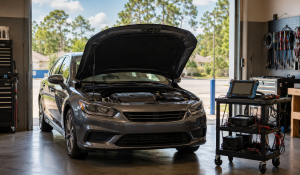
Trusted auto repair in Humble, TX for accurate no-start diagnosis
A no-start situation usually happens at the worst possible time, before work, in a parking lot, or when you’re already running late. The challenge isn’t just getting the car started, but figuring out why it failed in the first place. At Phil’s Car Care, drivers looking for auto repair near Humble, TX can turn to a nearby shop that has served the area since 1988. Our approach starts with one core principle: accurate diagnosis comes before repair.
Unlike shops that guess and replace parts, every vehicle here receives a Digital Vehicle Inspection (DVI) with photos and video, along with Carfax maintenance tracking, so you can clearly see the condition of your vehicle and understand the exact cause of the problem.
Owner David Evans has built the shop around a safety-first mindset—treating every vehicle as if it’s carrying his own family. That matters most when diagnosing electrical no-start issues, where one wrong assumption can lead to unnecessary repairs and repeated breakdowns.
Why your car won’t start in Humble, TX (quick answer)
The most common reasons a car won’t start include a weak battery, poor electrical connections, starter failure, or sensor issues. In Humble, TX, heat and humidity accelerate battery wear and corrosion, making electrical problems more common.
Quick checklist: what to check when your car won’t start
- Battery condition and age
- Corrosion on terminals or grounds
- Clicking vs no sound vs slow crank
- Dashboard lights dimming or staying bright
- Recent electrical or sensor issues
What it means when your car won’t start (electrical system explained)
When a vehicle won’t start, the first step isn’t replacing parts—it’s identifying the type of failure. From a diagnostic standpoint, every no-start condition falls into one of two categories: no-crank or crank-no-start.
A no-crank condition means the engine does not turn over at all. This typically points to issues in the electrical starting circuit—battery voltage, starter motor engagement, ignition switch signals, or even immobilizer systems preventing activation. In modern vehicles, especially push-button start systems, multiple modules must communicate before the starter is allowed to engage.
A crank-no-start condition, on the other hand, means the engine turns but fails to run. This shifts the focus to fuel delivery, ignition timing, and sensor input—particularly the crankshaft position sensor, which tells the engine when to fire.
In Humble, TX, environmental conditions play a major role. Heat accelerates battery degradation in high temperatures, while humidity leads to corrosion in terminals and grounds. This combination makes electrical failures more common than many drivers expect—especially in daily-driven vehicles like Ford F-150s and Toyota Camrys.
No-start symptoms that reveal the root cause quickly
Every no-start condition provides clues—you just have to know how to interpret them. Professional technicians rely heavily on symptom-based diagnostics to narrow down the issue before testing even begins.
A single click when turning the key often indicates the starter solenoid is attempting to engage but doesn’t have sufficient current to turn the motor. This could be a weak battery, poor connection, or failing starter.
Rapid clicking is typically a sign of insufficient voltage under load. The battery may show 12 volts at rest but collapse under demand—something only a proper battery load test can reveal.
A slow crank usually points to resistance in the system. This could be corroded cables, failing battery cells, or even internal starter wear increasing current draw.
If the engine cranks but doesn’t start, the issue shifts away from the battery and toward ignition or fuel delivery. Common culprits include ignition coil failure, fuel pump issues, or a faulty crankshaft position sensor.
If the vehicle clicks once but all lights stay bright, the issue is often in the starter or wiring. However, if the lights dim significantly at the same time, the problem is more likely related to battery capacity or voltage drop under load.
In real-world scenarios, these symptoms can overlap. For example, a Honda Accord might intermittently click due to voltage drop in a corroded ground—something that wouldn’t be obvious without testing.
A vehicle was towed in after failing to start in a grocery store parking lot on a hot afternoon. The driver reported hearing a single click when pressing the start button, but no engine movement. The battery had already been replaced the week prior, so the assumption was that the starter had failed.
During testing, the battery passed a load test, but voltage drop testing revealed excessive resistance on the ground side of the circuit. A corroded engine ground connection was limiting current flow to the starter. Once the connection was cleaned and secured, the vehicle started normally without replacing any major components.
Situations like this are common because the symptom points to one component, but the actual failure exists elsewhere in the system. Without proper testing, it’s easy to replace parts that aren’t the root cause.
How electrical failures develop in modern vehicles
Starting systems in modern vehicles aren’t just battery and starter anymore. Multiple modules have to agree before the engine is allowed to crank, which means a failure can come from wiring, communication issues, or security systems—not just a worn-out part.
This means a failure doesn’t always come from a physical component—it can also come from communication breakdowns between systems.
For example, if the Body Control Module (BCM) doesn’t recognize the key fob, it may prevent the Engine Control Module (ECM) from allowing the vehicle to start. Similarly, immobilizer systems can disable starting entirely if they detect a security issue.
Electrical failures also develop gradually. Corrosion increases resistance over time, reducing current flow. Heat damages wiring insulation, and moisture accelerates deterioration inside connectors.
One of the most misunderstood issues is voltage drop. A system may show full voltage at rest, but under load, resistance in cables or grounds can cause voltage to drop below the level required for operation. This is why static testing alone is not reliable.
What a Digital Vehicle Inspection reveals in no-start diagnostics
At Phil’s Car Care, diagnostics follow a structured process designed to eliminate guesswork.
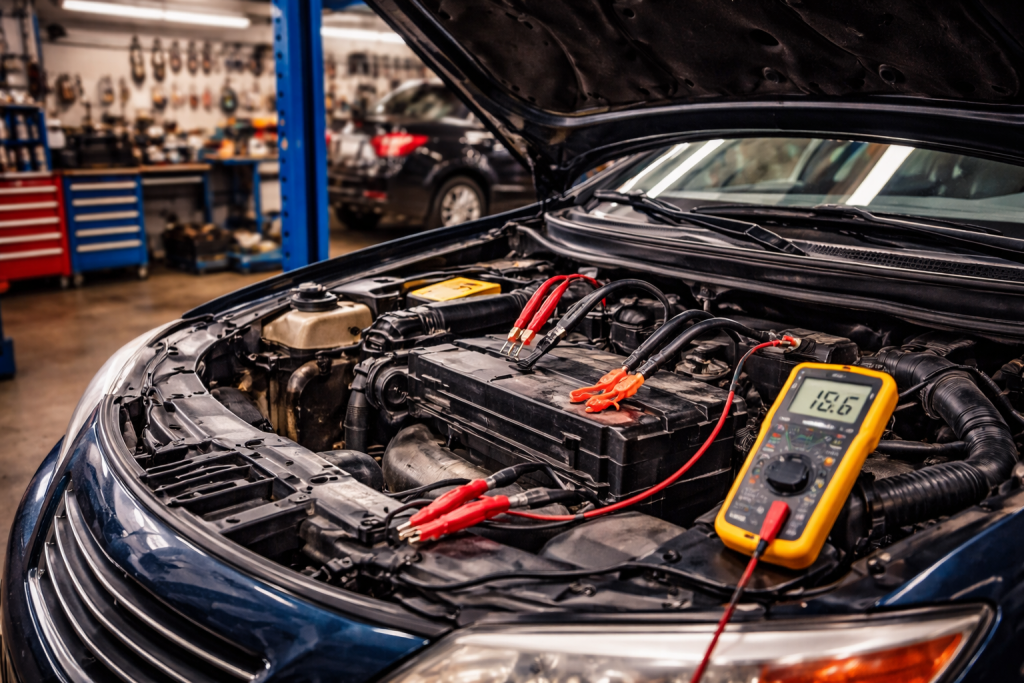
The first step is verifying the condition—determining whether it’s a no-crank or crank-no-start issue. From there, technicians test the battery using both static voltage and load testing. A healthy battery should maintain at least 9.6 volts under load.
Next comes voltage drop testing, which is one of the most critical steps in electrical diagnostics. By measuring voltage across cables and grounds while the system is under load, technicians can identify hidden resistance that would otherwise go unnoticed.
Starter testing involves measuring current draw using an amp clamp. Excessive draw indicates internal failure, while low draw may point to insufficient power supply.
Scan tools are then used to check for communication between modules and identify any stored fault codes. This is especially important in modern vehicles where starting depends on multiple systems working together.
Through DVI, customers can see actual images of corrosion, worn components, or damaged wiring—bringing transparency to a process that’s often invisible.
In many cases, identifying the cause of a no-start condition is less expensive than replacing the wrong part multiple times, which is why proper testing is prioritized before any repair is recommended.
Car won’t start in Humble, TX even after a new battery? Here’s why
Replacing the battery is often the first step drivers take—but it doesn’t always solve the problem. In fact, many no-start issues are misdiagnosed as battery failures.
A common scenario involves a vehicle that still won’t start after a new battery installation. This often points to issues like a failing starter motor, poor ground connection, or sensor failure.
For example, a Nissan Altima may crank inconsistently due to a failing crankshaft position sensor. The battery and starter may be functioning perfectly, but without the correct signal, the engine will not start.
Similarly, a bad ground connection can create enough resistance to prevent proper current flow, even with a fully charged battery.
This is why proper diagnostics are essential—replacing parts without testing often leads to frustration and unnecessary expense.
One of the most common mistakes drivers make is assuming a new battery eliminates electrical problems. In reality, a weak connection or failing starter can produce the same symptoms, even with a fully charged battery.
Why no-start problems are often misdiagnosed
Electrical diagnostics require time, tools, and expertise. Unfortunately, not all shops follow a structured diagnostic process.
Many rely on trial-and-error, replacing the most common components first. While this may occasionally fix the problem, it often leads to unnecessary repairs and missed root causes.
Common missteps include:
- Skipping voltage drop testing
- Ignoring ground circuits
- Replacing batteries without load testing
- Overlooking module communication issues
Phil’s Car Care avoids these pitfalls by using ASE Master Technician-level diagnostics, ensuring every repair is based on verified data—not assumptions.
Step-by-step diagnostic process for no-start issues
A proper diagnostic workflow always starts with the basics and progresses logically.
Technicians begin with the battery and connections, as these are the most common and least invasive issues. From there, they move to starter operation, checking both engagement and current draw.
Next, they evaluate communication between modules using scan tools, ensuring that all systems are functioning properly. Only after these steps do they move on to fuel and ignition system testing.
This structured approach ensures that every possible cause is evaluated in the correct order, minimizing unnecessary repairs and ensuring accurate results.
How heat, humidity, and storms cause electrical failures in Humble, TX
Humble’s climate plays a significant role in vehicle reliability. High temperatures accelerate chemical reactions inside batteries, shortening their lifespan. Humidity introduces moisture into electrical systems, leading to corrosion.
Storms can cause water intrusion into connectors and wiring harnesses, while short trips prevent the battery from fully recharging.
Vehicles in Humble that are primarily used for short trips are especially prone to battery-related no-start issues, since the alternator doesn’t have enough time to fully recharge the battery between starts.
These conditions create a perfect environment for electrical issues, especially in vehicles that are frequently driven short distances or exposed to the elements.
Push-button start, ignition, and sensor failures explained
Modern vehicles introduce new complexities in starting systems. Push-button start vehicles rely on multiple inputs before allowing the engine to start.
If the brake switch fails, the system may not recognize that the vehicle is ready to start. Similarly, issues with the key fob or immobilizer system can prevent starting altogether.
Sensor failures, particularly the crankshaft position sensor, are another common issue. Without accurate timing data, the engine cannot fire, even if it cranks normally.
These systems require advanced diagnostic tools and expertise to properly evaluate and repair.
Preventing no-start problems in Humble, TX before you get stranded
Most no-start situations don’t happen suddenly. There are usually early warning signs—slower cranking, hesitation, or inconsistent starts—that show up days or weeks before a complete failure.
Regular battery testing ensures that weak batteries are replaced before they fail. Cleaning terminals and inspecting connections prevents corrosion-related issues. Alternator testing ensures the battery is being properly charged.
These simple steps can significantly reduce the likelihood of unexpected breakdowns.
One expert tip to prevent electrical no-start failures
“If your car hesitates even once, it’s already warning you.”
Intermittent starting issues are often the first sign of deeper electrical problems. Addressing these early can prevent complete system failure and costly repairs.
Common no-start questions answered
Q: Why does my car click but not start?
This usually indicates insufficient battery power or a failing starter, but poor connections or voltage drop can cause the same symptom.
Q: Can a bad alternator cause a no-start?
Yes. If the alternator fails, the battery will not recharge and will eventually lose the ability to start the vehicle.
Q: Why does my car start sometimes but not others?
Intermittent issues are often caused by wiring faults, failing relays, or sensor problems.
Q: Do I need a mechanic if I replaced the battery?
Yes. If the issue persists, the root cause lies elsewhere in the system.
Schedule no-start diagnostics before you’re stranded
If your vehicle has shown any hesitation or inconsistent starting, it’s worth having it tested before it leaves you stranded.
Most no-start diagnostics can be narrowed down within the first hour of testing, but intermittent issues may require additional time to reproduce the condition and confirm the root cause.
At Phil’s Car Care, you’ll receive:
- A Digital Vehicle Inspection with real diagnostic data
- Service backed by a 3-year / 36,000-mile warranty
- Free shuttle service, night drop-off, and WiFi
Serving Humble, Porter, Kingwood, and surrounding areas, just minutes from Humble, located at 22321 E Martin Dr in Porter, TX.
Call 281-354-8700 today to schedule your diagnostic, get your vehicle fixed the right way, or contact us on Facebook because accurate diagnosis is the difference between a quick fix and a recurring problem.

Bryan Crocker is the Manager at Phil's Car Care and has more than 15 years of automotive leadership and repair industry experience. After serving more than 10 years in the U.S. Army maintaining M1A2 Abrams tanks, Bryan transitioned into automotive repair management, where he successfully led multiple repair facilities, improved operations, and built high-performing teams. Today, he works alongside founder David Evans to oversee daily operations, support Phil's Car Care's continued growth, and help ensure every customer receives honest recommendations, quality repairs, and exceptional service.